
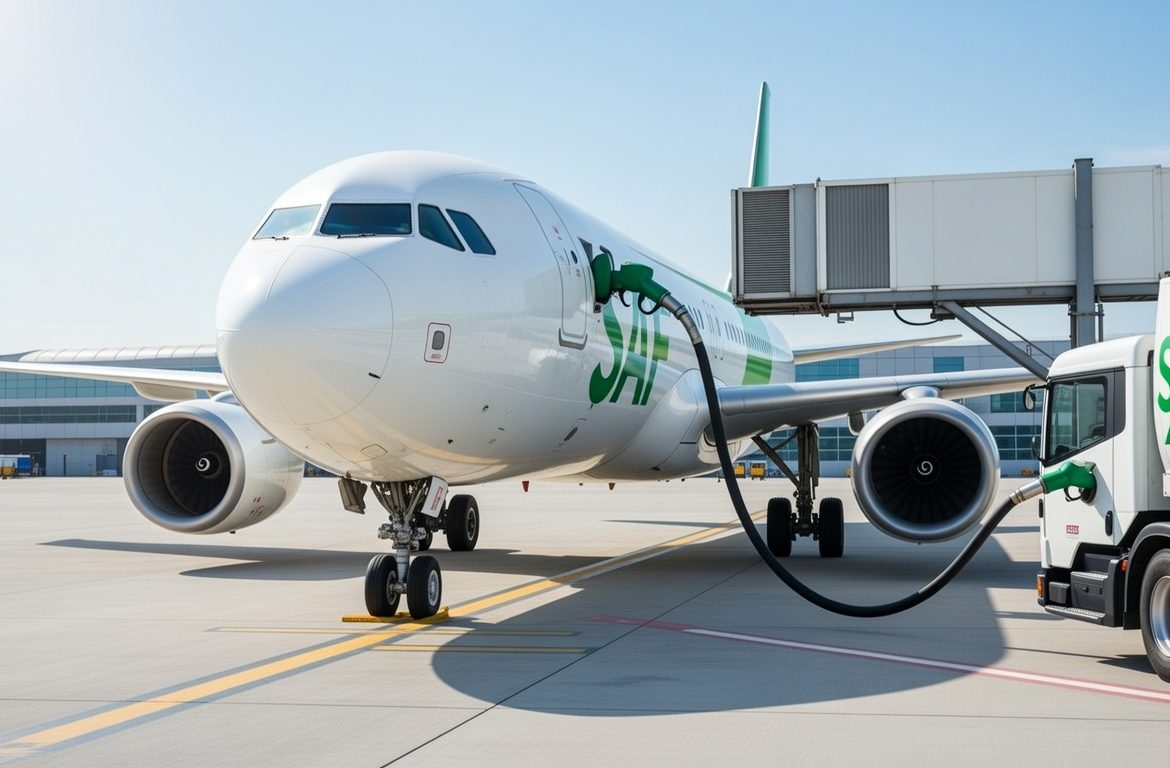
TotalEnergies sees EU softening aviation fuel rules after car ban u-turn
TotalEnergies CEO Patrick Pouyanne predicted a potential backtrack by the European Union on its sustainable aviation fuel (SAF) mandate on Wednesday, suggesting the bloc might dilute the requirement in a move mirroring its recent decision to abandon the proposed 2035 ban on new combustion-engine cars.
The European Union has taken a significant step toward decarbonising the aviation sector by implementing a mandatory blending requirement for Sustainable Aviation Fuel (SAF).
Under the ‘RefuelEU Aviation’ initiative, the EU mandated that, as of last year, a minimum of 2% of the jet fuel made available at its airports must be SAF.
EU’s aggressive SAF mandate
This requirement is not static but is designed to ramp up aggressively over time, reflecting the urgency of the climate crisis and the need for technological adoption.
Specifically, the mandated share of SAF will more than triple to 6% by 2030, marking an important mid-term milestone.
The trajectory continues upward, with the requirement set to reach a substantial 20% by 2035.
This progressive increase is intended to drive investment in SAF production capacity, reduce the aviation industry’s reliance on fossil fuels, and ensure a sustainable pathway for European air travel, positioning the EU as a global leader in aviation sustainability policy.
Speaking at a World Economic Forum panel on clean fuels, Pouyanne predicted that the European SAF regulation would follow the same path as the car regulation.
Pouyanne Bets on Regulatory Backtrack
Pouyanne was quoted as saying in a Reuters report:
All the airline companies are fighting the 6% SAF mandate, which frankly is easy to reach…I will make a bet today that what happened to the car regulation will happen to the SAF regulation in Europe.
TotalEnergies has established production of SAF across a number of its refineries and has articulated plans for further capacity expansion in this area.
However, the company has recently put a pause on planned investments aimed at significantly increasing this SAF production capacity.
This decision stems from market feedback indicating a lack of strong demand from their client base for volumes exceeding those required to meet current and forthcoming regulatory obligations within the European Union.
Essentially, the immediate demand for SAF appears to be driven by compliance with EU mandates rather than a broad, voluntary shift toward lower-emission fuels by airlines and other customers.
Price and compliance against demand
This situation suggests a broader challenge within the nascent SAF market: the current price premium associated with SAF, which is typically higher than that of conventional jet fuel, is proving to be a deterrent to wider adoption in the absence of stringent regulatory requirements.
As a result, TotalEnergies is recalibrating its investment strategy to align with the more conservative demand outlook primarily dictated by the EU’s blending mandates and quotas, rather than aggressive market penetration based on anticipated voluntary commitments.
SAF costs three to four times more than traditional oil-refined jet fuel.
While airline companies cite inadequate production volumes for their slow adoption of SAF, Pouyanne has dismissed this explanation.
Pouyanne stated that he was facing customers, specifically his airline companies in Europe, who were making a huge lobby effort and accusing them of not investing enough, an accusation he claimed was completely wrong.
I will be able to provide 10% of SAF to the airline companies in Europe by 2030, but…everybody is dreaming they can have these biofuels at the same price as (jet fuel made from) oil, but it’s not true.
Due to uncertainty surrounding regulations, the CEO indicated that he would probably reduce investments in low-carbon fuels.
The post TotalEnergies sees EU softening aviation fuel rules after car ban u-turn appeared first on Invezz