
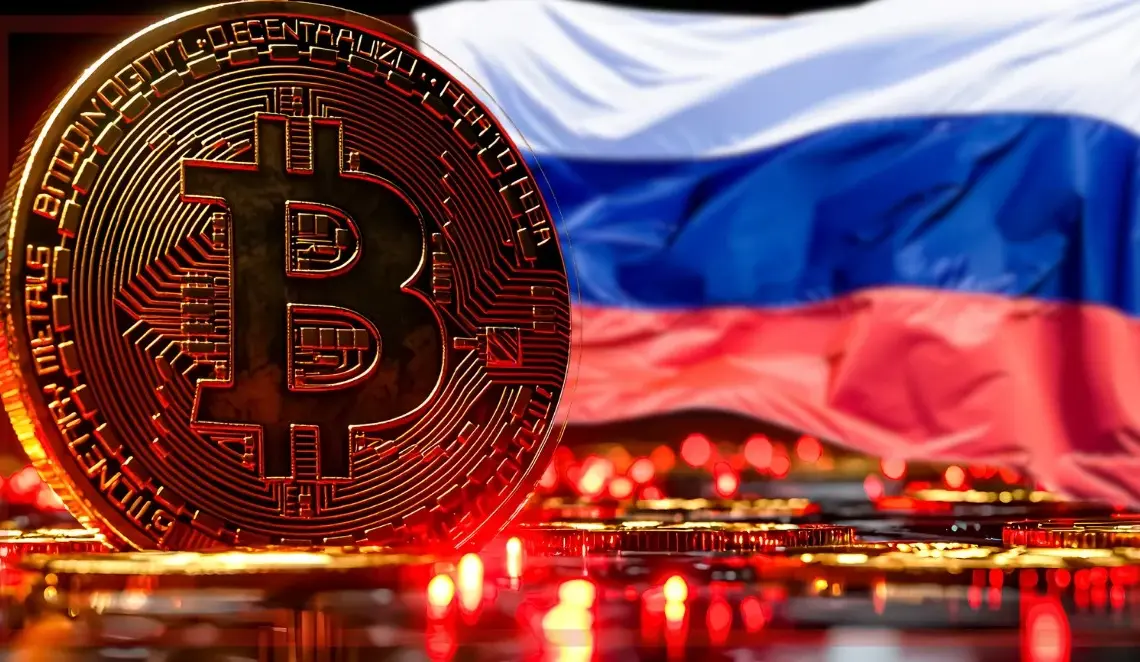
Russia’s comprehensive cryptocurrency law officially entered into force on September 1, establishing a regulated framework for buying, selling, holding and intermediating digital assets across the country.
Federal Law No. 282-FZ, signed by President Vladimir Putin on August 4, replaces major parts of Russia’s previous digital-asset regime and formally recognizes cryptocurrencies as property that can circulate through regulated financial infrastructure.
Both retail and qualified investors will be permitted to transact in cryptocurrencies through intermediaries. The framework also establishes dedicated crypto exchanges and digital depositories alongside existing brokers, asset managers and organized trading platforms.
The Bank of Russia has proposed Bitcoin, Ethereum and Tether’s USDT as the first cryptocurrencies eligible for public exchange trading under criteria covering market capitalization, average daily trading volume and at least five years of overseas pricing history.
Retail Investors Get Crypto Access With Limits
For non-qualified investors, access comes with significant restrictions. Retail investors must pass a knowledge test before purchasing cryptocurrency and will initially be limited to the most liquid assets approved by the Bank of Russia.
The central bank has proposed an annual purchase ceiling of 300,000 rubles through each intermediary. Qualified investors must also complete testing but can purchase any cryptocurrencies available through regulated exchange or over-the-counter markets without the same monetary limit.
The legislation permits cryptocurrency transactions through brokers and management companies and allows digital assets to be exchanged for securities and Russian-law digital rights. Foreign stablecoins fall within the cryptocurrency framework, explaining why USDT can qualify alongside Bitcoin and Ether. Cryptocurrency nevertheless remains prohibited as a domestic payment method.
Russian businesses cannot simply begin accepting BTC, ETH or USDT for goods and services because the September 1 framework recognizes them primarily as investable property rather than legal payment instruments. Cross-border commerce receives substantially different treatment.
Russian exporters and importers can use cryptocurrencies for international payments without monetary limits, either through intermediaries or directly through wallets. That provision formalizes an increasingly important alternative settlement mechanism for Russian companies facing difficulties accessing conventional international payment infrastructure following Western sanctions.
Full Regulatory Transition Extends Into 2027
September 1 does not mean every component of Russia’s regulated crypto market becomes operational immediately. The law provides transition periods allowing existing companies to obtain licenses and restructure their businesses. Market participants generally have until July 1, 2027 to satisfy licensing requirements and bring operations into compliance with the new framework.
Additional provisions governing areas including digital depositories and certain digital-financial-asset infrastructure take effect later in 2027. Anti-money-laundering requirements are also becoming more extensive.
Rosfinmonitoring says cryptocurrency transactions will be subject to requirements for information identifying the sender and recipient, bringing Russian digital-asset intermediaries closer to international travel-rule standards. Russian residents using foreign crypto infrastructure face additional reporting obligations.
The Bank of Russia says residents may transact with cryptocurrency abroad through foreign bank accounts, while crypto holdings recorded outside Russia must be reported to tax authorities. The framework represents a major shift from Russia’s previous approach.
Rather than attempting to exclude cryptocurrencies from its financial system, Moscow is creating regulated channels through which individuals and institutions can hold and trade them while retaining strict control over intermediaries.
The Bank of Russia is simultaneously developing rules allowing brokers to recognize cryptocurrency as collateral for margin transactions and requiring professional market participants to incorporate crypto exposure into capital and financial-resilience calculations.
That distinction defines Russia’s new policy. Cryptocurrency is being integrated into investment, trading, custody, collateral and cross-border settlement infrastructure — but not legalized as everyday money. September 1 therefore marks the beginning rather than the completion of Russia’s regulated crypto market.
The legal framework is now in force. The next stage will determine how quickly licensed exchanges, depositories, brokers and banks can build the infrastructure required to turn those statutory permissions into a functioning domestic market.