
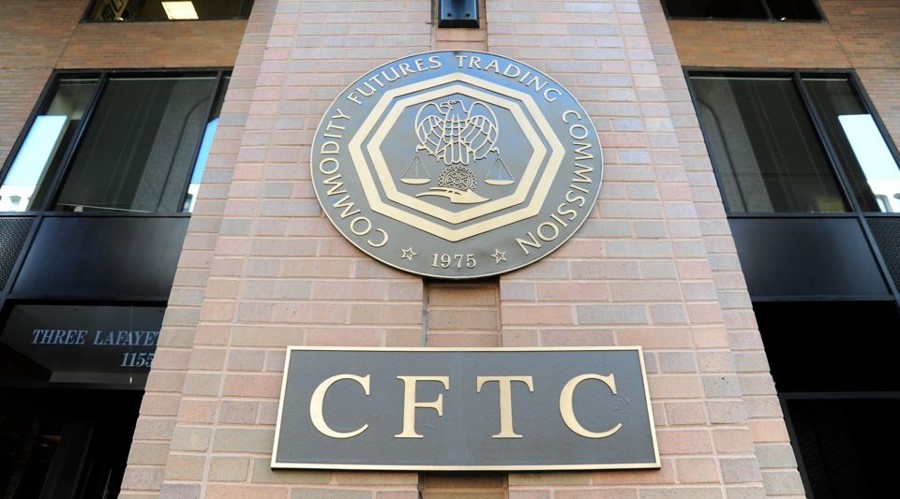
The US Commodity Futures Trading Commission is prepared to continue advancing cryptocurrency regulation even if Congress fails to pass the CLARITY Act, signaling that Washington’s push for clearer digital-asset rules will not necessarily stop if lawmakers remain deadlocked. The CFTC is developing regulatory measures that can be implemented under its existing authority while Congress continues debating comprehensive crypto market-structure legislation. The approach effectively creates a regulatory fallback if the CLARITY Act fails to become law this year.
The distinction is important. The CFTC can regulate crypto derivatives, police fraud and manipulation within areas covered by existing commodities law and establish rules affecting entities already under its jurisdiction. What it cannot do on its own is recreate the central feature of the CLARITY Act: comprehensive statutory authority over US spot markets for digital commodities. The legislation would explicitly give the CFTC exclusive jurisdiction over digital-commodity spot markets while creating registration regimes for digital-asset exchanges, brokers and dealers. Without congressional action, the agency’s ability to regulate those markets remains considerably more fragmented.
CFTC Builds a Regulatory Backup Plan
The CFTC’s willingness to proceed independently reflects growing concern that the CLARITY Act could remain stalled despite months of negotiations. The House has already approved market-structure legislation, but Senate negotiations have faced repeated delays over consumer protections, banking provisions, regulatory jurisdiction and ethics requirements involving senior government officials and their cryptocurrency interests. As the legislative process has slowed, federal regulators have increasingly begun implementing portions of the administration’s digital-asset agenda using authority they already possess.
The CFTC has been particularly active. The agency has pursued initiatives involving tokenized collateral, crypto derivatives, prediction markets and round-the-clock trading while modernizing rules originally written for conventional commodity markets. It has also withdrawn outdated digital-asset guidance and previously launched a pilot program allowing certain cryptocurrencies, including Bitcoin, Ether and USDC, to be used as collateral in derivatives markets. The broader objective is to establish workable rules for blockchain-based financial markets without waiting indefinitely for Congress. That strategy complements the SEC’s own accelerating crypto rulemaking agenda. The securities regulator is scheduled to consider Regulation Crypto Assets on Friday, August 14, a proposal that could establish a tailored offering regime for certain investment contracts involving digital assets.
Under the proposed framework, the CFTC would receive exclusive authority over spot transactions involving qualifying digital commodities, while the SEC would retain jurisdiction over securities and investment-contract arrangements. The legislation would also establish federal registration requirements for digital commodity exchanges, brokers and dealers. Those powers cannot simply be created through CFTC regulation because federal agencies derive their jurisdiction from statutes passed by Congress. That means a CFTC-only approach could clarify how existing laws apply to cryptocurrency while still leaving major gaps in the regulation of spot exchanges and other intermediaries. Rules created administratively can also be easier for a future administration to reverse than legislation enacted by Congress.
Agency Action Reduces Stakes of Congressional Delay
The immediate consequence is that failure to pass CLARITY no longer necessarily means another year of regulatory paralysis. Both major US market regulators are now moving independently. The SEC’s Project Crypto is modernizing securities regulation for blockchain-based markets, while the CFTC has been developing its own crypto initiatives and aligning areas of overlapping regulation with the securities agency. CFTC Chairman Michael Selig has repeatedly argued that financial regulation should accommodate innovation rather than force emerging technologies into frameworks designed for older markets. That philosophy is increasingly visible in the Commission’s rulemaking agenda.
For cryptocurrency companies, the result could be considerably greater regulatory clarity even without congressional legislation. But it would be a narrower and potentially less durable form of clarity than the industry would receive from a comprehensive federal statute. The difference matters most for crypto spot markets. Bitcoin and other commodities can trade on US platforms today, but there is still no comprehensive federal regulatory regime comparable to the framework governing securities exchanges. The CLARITY Act is intended to close that gap by explicitly putting qualifying markets under the CFTC. Until Congress acts, that jurisdictional hole remains.