
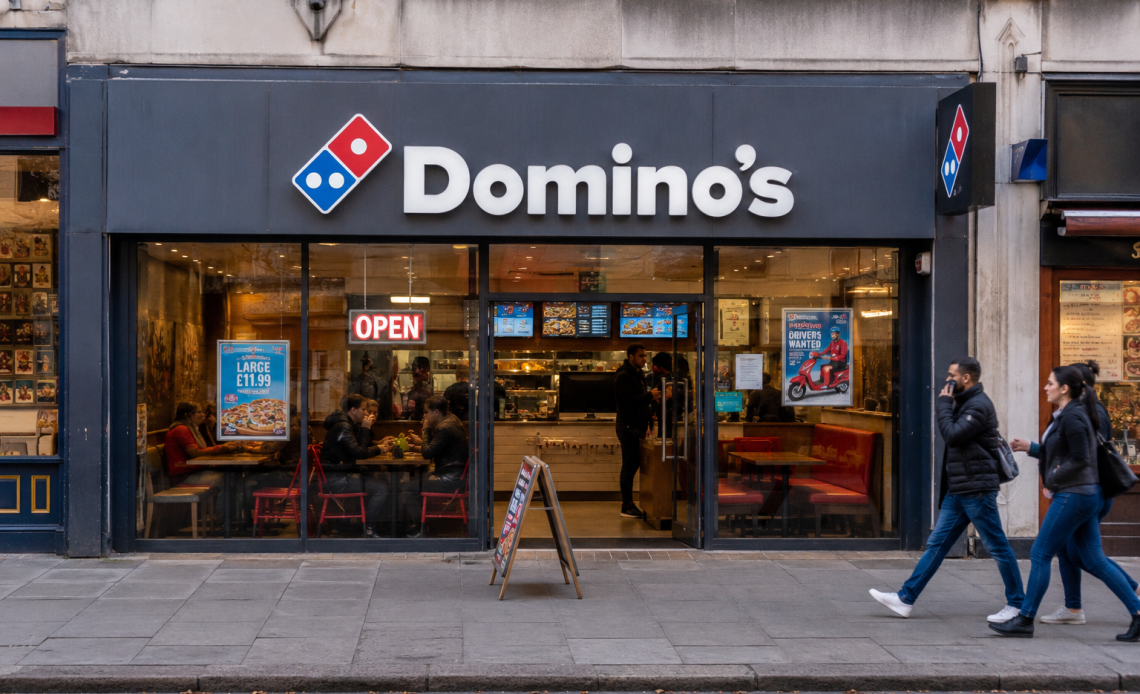
Domino’s Pizza reported second-quarter revenue that narrowly exceeded Wall Street expectations, as growth in its supply-chain business helped offset softer demand across its restaurant operations.
Consumers continued to limit discretionary spending, weighing on sales at the pizza chain’s stores.
The Ann Arbor, Michigan-based company reported second-quarter revenue of $1.19 billion, slightly above analysts’ estimates of $1.18 billion.
The performance was supported by a 6.5% increase in quarterly supply-chain revenue, which rose to $731.7 million.
The company said supply-chain revenue benefited from higher order volumes from stores and a 2.2% increase in food-basket pricing.
The increase reflected modest inflation in the ingredients and supplies that Domino’s sells to its franchisees.
Commenting on the results, retiring Chief Executive Officer Russell Weiner emphasized the significance of order growth for the company’s long-term performance.
“I believe order growth is the most important driver of long-term success in our business,” Domino’s Arbouremphasisedretiring CEO Russell Weiner said in a statement.
US same-store sales fall short of expectations
Despite stronger supply-chain revenue, Domino’s restaurant business continued to face challenges during the quarter.
US same-store sales increased just 0.1% for the quarter ended June 14.
The result fell short of analysts’ expectations for a 0.62% increase, according to data compiled by LSEG.
In the corresponding quarter last year, same-store sales had risen 3.4%.
The slower growth reflects continued pressure on consumer spending, as customers remain cautious about discretionary purchases, including dining out.
Consumer spending pressures persist
Domino’s quarterly sales growth has slowed over the past several quarters.
The company attributed the trend to concerns over higher living costs and a sluggish US job market, which have discouraged consumers from spending on non-essential items.
Weiner said the broader US quick-service restaurant industry continues to face pressure.
His comments echoed a warning he issued in April, when he said consumer sentiment had fallen to COVID-19-era lows in March as inflation influenced household spending decisions.
The remarks suggest that the challenging consumer environment continued throughout the second quarter, affecting demand across the restaurant business.
Rising costs weigh on quarterly earnings
The company also faced higher operating costs during the quarter.
DPZ reported quarterly cost of sales of $716.2 million, up 4.7% from the same period a year earlier.
The increase in costs weighed on profitability despite the improvement in revenue.
Quarterly earnings came in at $4.07 per share, below analysts’ expectations of $4.17 per share.
The earnings miss was primarily driven by the higher cost of sales.
Shares rise in premarket trading
Investors responded positively to the revenue performance despite the earnings miss and softer restaurant sales.
Shares of Domino’s, which had declined about 23% so far this year, rose around 7.08% in premarket trading following the release of the quarterly results.
While supply-chain operations continued to provide support for the company’s top line, the latest results also highlighted the ongoing challenges facing its restaurant business.
Weak consumer sentiment, cautious discretionary spending, and rising costs remained key factors influencing Domino’s performance during the second quarter.
The post Domino's Q2 tops estimates as supply-chain growth offsets restaurant demand appeared first on Invezz