
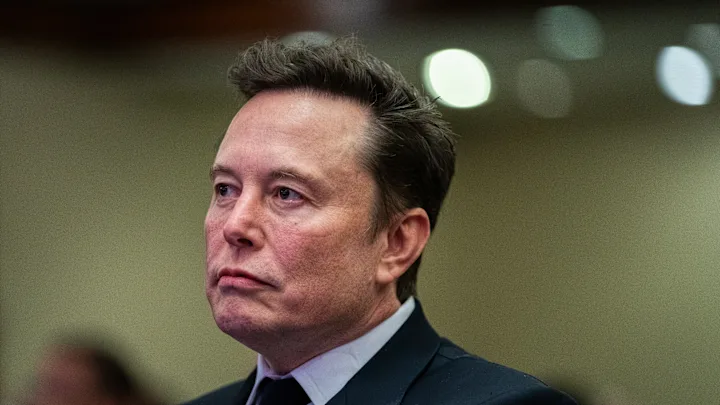
Elon Musk said SpaceX could generate $1 trillion in annual revenue by 2030, a target that would place the company among the largest revenue-generating businesses in history and far above current Wall Street forecasts. The projection came shortly after SpaceX’s public market debut, which valued the rocket, satellite and space infrastructure company at more than $2 trillion.
Musk’s forecast is highly ambitious. SpaceX reported revenue of $18.67 billion in 2025, up from $14.02 billion in 2024, according to recent market reports. Reaching $1 trillion by 2030 would require revenue to increase more than 50 times in five years, implying a pace of growth rarely seen at companies of SpaceX’s current size.
The projection also exceeds existing analyst estimates by a wide margin. Morgan Stanley has reportedly estimated SpaceX revenue at roughly $330 billion by 2030, while Goldman Sachs has projected about $470 billion. Those figures are already aggressive, but Musk’s target assumes a much larger expansion across Starlink, reusable launch services, defense contracts, satellite manufacturing and potential artificial intelligence infrastructure.
Starlink becomes the growth engine
The central driver of the $1 trillion case is Starlink, SpaceX’s satellite broadband network. Starlink has become the company’s largest and fastest-growing commercial business, providing internet access to households, enterprises, ships, aircraft, remote communities and governments. Its revenue base is expected to expand as subscriber numbers rise and as SpaceX adds higher-margin services for aviation, maritime, defense and enterprise customers.
For Musk’s forecast to be achieved, Starlink would likely need to evolve from a broadband provider into a global communications and data infrastructure platform. That could include direct-to-device connectivity, government communications, defense applications and high-capacity links for AI data movement. SpaceX’s vertical integration gives it an advantage because it builds satellites, launches them on its own rockets and operates the customer-facing network.
Reusable launch services are another pillar of the growth story. SpaceX dominates commercial launch markets through Falcon 9 and is betting that Starship will sharply reduce the cost of putting payloads into orbit. If Starship reaches reliable commercial scale, it could expand markets for satellite deployment, lunar missions, deep-space logistics and large-scale orbital infrastructure.
However, the revenue target still requires extraordinary execution. SpaceX would need to scale manufacturing, launch cadence, satellite capacity, customer acquisition and regulatory approvals across multiple countries. It would also need to convert technological leadership into sustained profitability, not only rapid top-line growth.
Valuation debate intensifies
Musk’s comment comes as investors debate whether SpaceX’s valuation already prices in years of flawless growth. A company valued above $2 trillion with less than $20 billion in recent annual revenue carries an unusually high revenue multiple, even by technology-sector standards. That makes future execution critical.
Supporters argue that SpaceX is not a conventional aerospace company. They view it as a platform business combining telecommunications, transport, defense, AI infrastructure and strategic space assets. From that perspective, current revenue may understate the company’s long-term addressable market.
Skeptics argue that a $1 trillion revenue target by 2030 is difficult to justify using existing business lines. Launch markets are large but not trillion-dollar annual markets today, while satellite broadband faces competition, capital intensity and regulatory limits. Defense and government contracts can be lucrative but are also politically sensitive and procurement-driven.
The broader market implication is that SpaceX has become a test case for how investors value frontier infrastructure companies. If Musk’s projection gains credibility, it could support premium valuations across space, satellite, defense technology and AI infrastructure sectors. If growth falls short, SpaceX could face pressure similar to other high-expectation technology companies whose valuations moved ahead of fundamentals.
Musk’s $1 trillion revenue forecast is therefore both a statement of ambition and a new benchmark for investors. SpaceX has already reshaped the launch industry and built the world’s leading satellite broadband network. The challenge now is whether it can turn that technological dominance into revenue at a scale that would rival the largest companies on earth.