
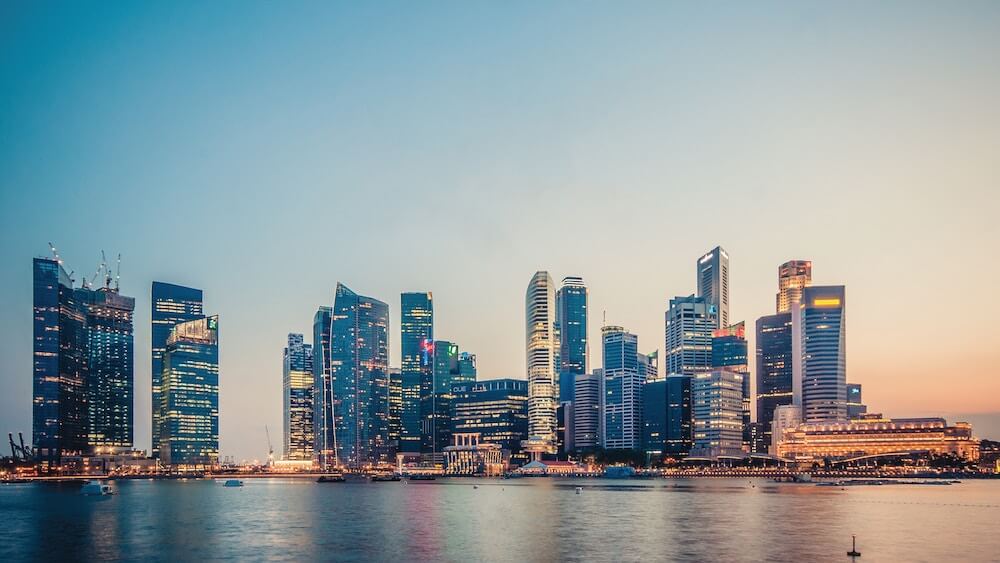
Blockworks is bringing its Digital Asset Summit to Singapore for the first time, placing a one-day institutional programme alongside TOKEN2049 at Marina Bay Sands. The speaker list includes executives from Hyperliquid, Coinbase Institutional, BitGo, Kraken, Binance, Fidelity Investments, BlackRock and Robinhood, with sessions focused on stablecoins, tokenised markets, decentralised finance, regulation and asset allocation.
The move is more than geographic expansion for an events brand. It places an institution-focused forum inside the week when much of the global crypto industry is already in Singapore, while narrowing the agenda toward the infrastructure and investment questions that banks, funds and allocators are trying to resolve.
Singapore Gives The Summit An Institutional Base
Singapore has become a meeting point for crypto companies, global financial institutions and Asian capital. Its licensing regime has been selective, but that selectivity has helped distinguish regulated payment and digital asset businesses from the larger number of offshore platforms serving the region.
FinanceFeeds identified Singapore as a major institutional crypto hub, supported by its financial centre, regulatory structure and conference calendar. Holding Digital Asset Summit during TOKEN2049 week lets Blockworks draw from participants already travelling for meetings, product launches and investor discussions.
The event is scheduled for October 7 and is organised as a concentrated single-day programme rather than a broad retail expo. Blockworks is targeting asset managers, hedge funds, banks, payment providers, fintech companies and institutional allocators. Past Digital Asset Summit events have represented more than $3 trillion in assets under management, according to the organiser.
The Agenda Shows Where Institutional Demand Has Moved
The programme is built around six connected themes: stablecoins and payments, enterprise financial technology, institutional investment, tokenised capital markets, global policy and decentralised finance risk. That mix shows how the institutional conversation has moved beyond whether crypto should be treated as an asset class.
The speaker list also places competitors on the same programme. Coinbase, Kraken, Binance, BitGo and Hyperliquid represent different combinations of custody, exchange, brokerage and on-chain infrastructure. Their participation should make differences in business model visible instead of treating institutional digital assets as one category.
Fidelity and BlackRock bring another perspective: institutions that can distribute regulated investment products without relying on crypto-native channels. Their presence shifts the discussion toward fees, liquidity, portfolio use and fiduciary controls, areas where protocols must compete with established products rather than only other blockchain projects.
Stablecoins are increasingly evaluated as payment and settlement infrastructure. Tokenisation is moving from proofs of concept toward live funds and securities. On-chain trading venues are developing products and liquidity large enough to attract conventional market makers and brokers.
Hyperliquid founder Jeff Yan is among the speakers, giving the programme a direct link to the rise of on-chain perpetuals. Hyperliquid has been adding institutional execution methods and tokenised equity markets, while its scale has pushed questions about custody, surveillance and regulatory access to the centre of market-structure discussions.
Robinhood’s participation brings the retail distribution side of tokenisation into the room. Vlad Tenev has argued that tokenisation will become the default route to US stock exposure outside the country. Institutional investors may debate the legal form and settlement model, but brokers are already testing how tokenised products can reach end users.
Asia Is Not A Single Digital Asset Market
The summit’s regional label should not obscure major differences across Asia. Singapore, Hong Kong, Japan, South Korea and the Gulf states have developed different licensing, custody and product rules. Mainland China maintains tighter restrictions, while offshore venues still serve customers across several jurisdictions.
That fragmentation makes cross-border infrastructure a recurring issue. A stablecoin used for settlement may be regulated differently from the fund token or exchange on the other side of a transaction. An institution needs to know which entity holds client assets, where orders are executed and whether a token represents legal ownership or only contractual exposure.
Singapore’s Major Payment Institution framework has already attracted global crypto firms, but a payment licence does not automatically authorise securities dealing, derivatives or asset management. The institutional audience Blockworks is gathering will therefore be discussing a collection of connected regulatory perimeters rather than one regional rulebook.
Conferences Are Becoming Part Of Market Infrastructure
Michael Ippolito, Co-Founder of Blockworks, said tokenisation, stablecoins and on-chain infrastructure are changing how capital moves across markets and jurisdictions. The speaker mix supports that thesis, but it also shows a commercial reality: events have become one of the places where digital asset firms compete for institutional trust.
Fidelity, Grayscale and 50T Funds are presenting sponsors, while BNB Chain, Broadridge and Forward Industries are diamond sponsors. Sponsorship does not determine adoption, but it indicates which themes and audiences companies are willing to fund.
The summit also arrives as conference organisers face greater scrutiny over who appears on stage and who pays for access. TOKEN2049 previously drew attention over a sanctioned stablecoin sponsor, showing that event governance can carry reputational and compliance consequences.
A one-day format creates a second challenge: the programme has to move beyond broad adoption claims. Stablecoins, tokenised funds and perpetuals are now large enough that institutional attendees need details on liquidity, legal claims, collateral, operational responsibility and returns. Panels that remain at the level of inevitability will add little to decisions already moving through investment and risk committees.
The presence of allocators alongside exchanges and protocol founders gives Blockworks a chance to test the industry’s claims against the people deploying capital. Their questions tend to be less about transaction speed and more about governance, cash flows, exit routes and who absorbs losses when a process fails.
Digital Asset Summit Asia gives Blockworks a position in the region’s most crowded crypto week. Its success will depend less on the size of the speaker list than on whether the programme produces concrete answers about settlement, regulation, liquidity and returns. Those are the questions institutions now ask after the industry has moved beyond the first stage of adoption.