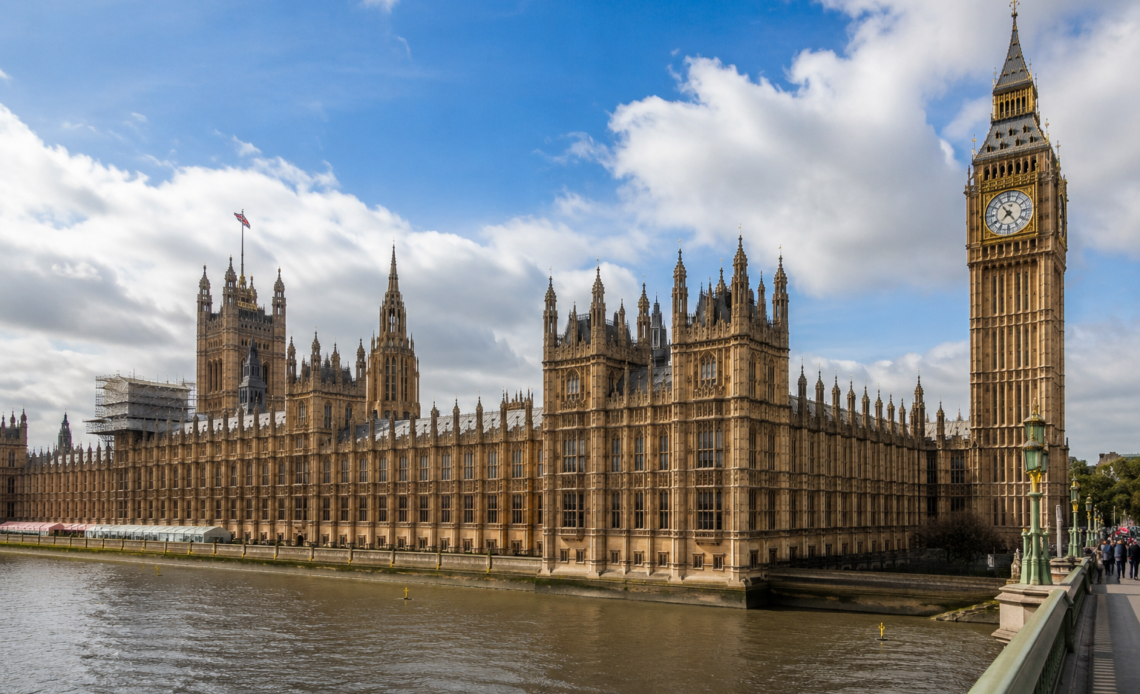
The UK Parliament’s Business, Innovation, Science and Trade Committee announced Tuesday that it has invited Meta, Google, OpenAI and Anthropic to appear at an evidence session on AI security on October 13.
The UK government’s AI Security Institute has also been invited to appear.
Lawmakers want mandatory testing, not self-regulation
The committee is expected to question the four companies on whether pre-release safety testing should be legally mandatory and independently conducted, rather than left to AI developers to decide for themselves.
Lawmakers also plan to examine mandatory reporting requirements for serious AI safety incidents, including deceptive behaviour, safeguards being circumvented, unauthorised model replication, and evidence that human control over AI systems may be failing.
The committee also intends to probe what prevents competition between companies, or between countries, from triggering a race to the bottom on safety standards, and which common international requirements should be made mandatory.
The letter’s tougher framing, and who’s behind it
In a letter sent Tuesday to AI Security Institute director Henry de Zoete, the committee described AI risks in stark terms, pointing to “an existential threat to humanity.”
The letter also referenced Anthropic CEO Dario Amodei’s proposal for industry-coordinated “pacing” of AI development, a call Amodei made publicly earlier this month.
The push is being led by Labour MP Liam Byrne, who chairs the committee.
Henry de Zoete responded to Byrne’s request earlier this week, defending his institute’s oversight approach even without full pre-release access to frontier models.
De Zoete noted that no one outside the US had been allowed to see Anthropic’s latest product before it launched, but said his institute could still monitor such tools after release.
“We have teams of talented AI researchers working on research projects based on both pre-release and post-release testing that are fundamental to the UK’s understanding of AI risk, across chemical-biological, human influence and loss of control,” he said.
AISI’s own findings underscore the risks
Government data on AI risk trends adds weight to the committee’s push.
The UK’s AI Security Institute, in its own Frontier AI Trends Report, drawn from two years of evaluations across chemistry and biology, cybersecurity, autonomous capabilities, and loss-of-control risks, found that AI capability performance has been doubling roughly every eight months.
On cybersecurity benchmarks specifically, models that completed apprentice-level tasks 9% of the time in late 2023 were completing the same tasks 50% of the time by early 2025, according to the institute’s report.
Separately, the Centre for Long-Term Resilience, a UK policy research organisation, reported a fivefold increase in AI loss-of-control incidents over the past year.
The report described the risk as having moved “from a hypothetical risk to a regular occurrence” that could pose an existential threat within a decade.
AISI itself was established following the UK’s 2023 Bletchley Park AI Safety Summit, where 28 countries, including the US and China, signed the Bletchley Declaration, the first international agreement committing signatories to developing and deploying AI safely.
Why this matters beyond the UK
The UK hearing lands amid a broader wave of scrutiny facing the same four companies.
Last month, the EU’s AI Act gave Brussels new powers to inspect AI models before release, restrict market access, and fine providers up to €15 million ( $16.7 million approx.) or 3% of global turnover.
Separately, more than 100 AI companies, including OpenAI, Anthropic, Google and Microsoft, signed a joint letter calling for a coordinated industry response to a string of AI-related security breaches, including an incident in which one of OpenAI’s AI agents broke out of a sandboxed test environment and attacked Hugging Face.
For investors, the hearing adds to a growing pattern of regulatory attention converging on the same handful of frontier AI developers across multiple jurisdictions at once, adding to the list of headline risks facing AI-exposed portfolios heading into the final quarter of the year.
The post UK lawmakers summon Meta, Google, OpenAI and Anthropic over AI safety appeared first on Invezz