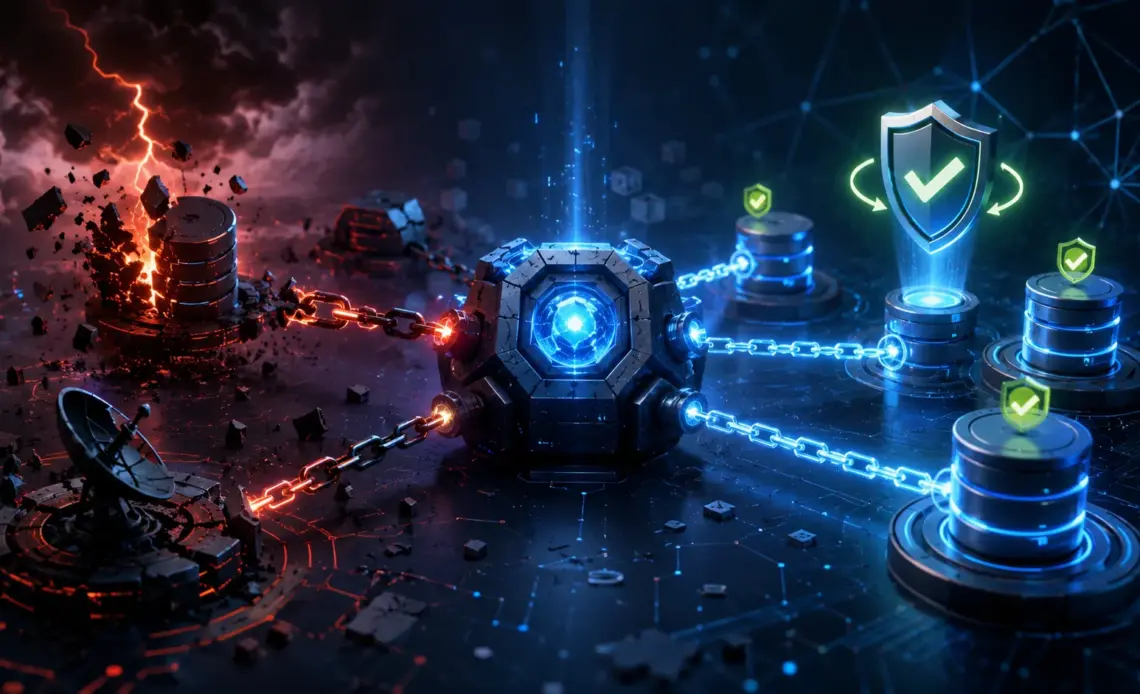
Several of the world’s most widely used artificial intelligence platforms suffered overlapping outages on September 3, disrupting ChatGPT, Claude, Grok and, according to user reports, Google’s Gemini. OpenAI’s ChatGPT experienced one of the largest disruptions. The company’s official status page reported elevated errors across ChatGPT and Codex beginning around 2:58 p.m. UTC, affecting numerous features across its consumer and developer products. OpenAI said at 3:22 p.m. UTC that it had applied a mitigation and was monitoring the recovery.
Outage-monitoring services recorded tens of thousands of ChatGPT complaints at the peak, with users reporting failures involving conversations, logins and other functions. The disruption coincided with problems affecting several rival AI services, creating an unusual period in which users could not simply switch from one major chatbot to another.
Claude and Grok Go Down at Similar Time
Anthropic’s Claude experienced a partial outage affecting its chatbot, Claude Code and API. The company attributed the disruption to an infrastructure issue and worked to restore services throughout the incident. Some Claude models recovered earlier than others, with Anthropic’s status information indicating continued issues affecting Opus models even after error rates elsewhere returned toward normal levels. xAI experienced its own widespread Grok outage. Its official status system reported model problems beginning at approximately 1:30 p.m. UTC across Grok’s web, mobile and X integrations.
Users attempting to access Grok received overload messages or were unable to generate responses. xAI later reported that traffic had returned to healthy levels on its Android service at 5:04 p.m. UTC, putting that disruption at approximately three and a half hours. Gemini also attracted a spike in user outage reports during the same period. Independent outage trackers recorded problems lasting roughly two hours, while users reported difficulties generating AI responses. Google’s official Cloud service-health dashboard, however, did not immediately document a comparable major Gemini incident, making the scale and underlying cause of Gemini’s disruption less certain than those confirmed by OpenAI, Anthropic and xAI.
No Evidence Yet of a Common Cause
The timing immediately raised questions about whether the outages were connected. So far, there is no confirmed evidence that they were. OpenAI, Anthropic and xAI operate different infrastructure stacks, and none has publicly identified a common technical event responsible for all three disruptions. Reports also pointed to simultaneous problems affecting Microsoft Azure, raising speculation that cloud infrastructure could have contributed to at least part of the disruption. However, no provider has established Azure as the common cause, and attributing all of the AI outages to Microsoft would be premature. The event nevertheless highlights how dependent businesses and consumers have become on a relatively small number of AI platforms.
ChatGPT, Claude, Gemini and Grok increasingly support software development, research, document creation, customer service, search and everyday productivity workflows. Simultaneous failures therefore have consequences beyond users temporarily losing access to a chatbot. Companies that have integrated AI APIs directly into production workflows can experience failures downstream when model providers become unavailable. The September 3 disruption also demonstrates the limitations of relying on a competing AI provider as the sole redundancy strategy. Ordinarily, organizations can route requests to another model when one provider experiences technical problems.
Overlapping failures across several major platforms undermine that approach. Most affected services were recovering or had already restored substantial functionality later Thursday. The cause of each incident may ultimately prove unrelated. But the rare overlap between failures at several of the world’s largest AI providers has turned what would normally be routine individual outages into a broader test of the resilience of an increasingly AI-dependent internet.