
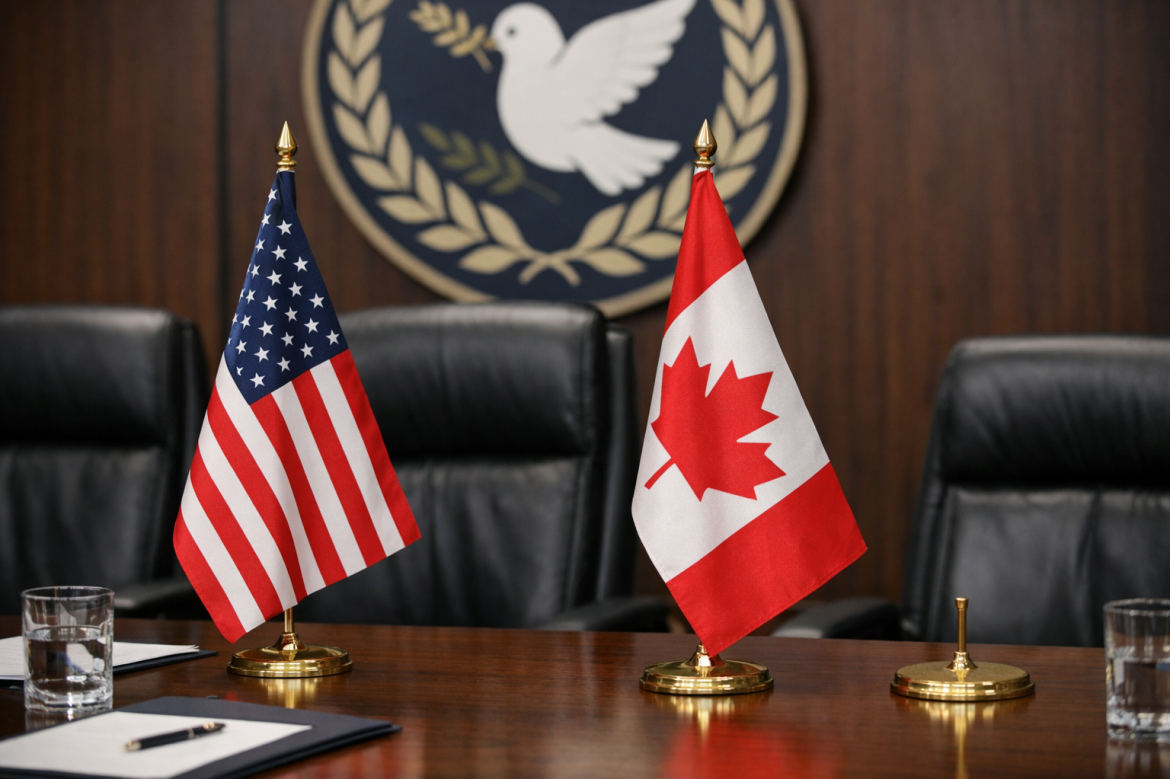
The USD/CAD exchange rate crashed to the lowest level since January 5 as the US dollar index retreated after the Greenland crisis eased. It plunged for five consecutive days in its longest losing streak since May 2025.
Donald Trump threatens Canada tariff
One key catalyst for the USD/CAD exchange rate will be a threat by Donald Trump to punish Canada with a 100% tariff on all its exports to the US, including on goods covered by the USMCA deal he negotiated.
Trump is angry that Canada reached a trade deal with China that lowers tariffs on Chinese electric vehicles to 6%. In exchange, China removed canola tariffs it had put in place a few years ago.
Most importantly, he is disappointed with a speech Mark Carney delivered at the World Economic Forum (WEF) in Switzerland last week. Carney criticized the ongoing power games by the largest economies in the world and asked middle countries to team and respond to these measures.
The statement was mostly targeted towards Trump, who had threatened to take Greenland, a semi-autonomous island with ties to Denmark.
A 100% tariff on goods from Canada would be a big deal because of the vast amount of goods that flow to the United States from Canada. Also, Canada is the biggest US trade partner, buying goods worth billions of dollars a year.
Still, Trump is known for TACO, a phrase that means Trump Always Chickens Out, as he did on the Greenland issue last week. After threatening to take over the island, he reached a deal that brought no major changes to the existing agreement.
Bank of Canada interest rate decision
The next major catalyst for the USD/CAD exchange rate is the upcoming Bank of Canada interest rate decision that will come out on Thursday.
Economists believe that the bank will decide to leave interest rates unchanged at 2.25% to give policymakers a chance to digest more macro data.
Recent numbers have sent mixed messages about the Canadian economy. For example, the country’s labor market slowed substantially in December after growing in the previous three consecutive months. At the same time, a report released last week showed that Canada’s inflation rose more than expected in December.
Most analysts believe that the bank will then leave interest rates unchanged at the current level for the rest of the year. In a statement to Reuters, an analyst said:
“At this point, the BoC is ready to take a fairly long wait-and-see stance. If there’s a risk of a move, it’s more likely to be a cut than a hike this year.”
Federal Reserve interest rate decision
The other major catalyst for the pair will be the upcoming Federal Reserve interest rate decision, which will come out on Wednesday.
Like the BoC, analysts believe that the Federal Reserve will leave interest rates unchanged between 3.50% and 3.75% in this meeting.
The US has released encouraging macro data recently. A report released last week showed that the US GDP expanded by 4.4% in the third quarter, better than the median estimate of 4.3%.
Another report showed that the labor market has started to improve in the past few months, while inflation has been a bit constrained.
USD/CAD Technical Analysis
USD/CAD chart | Source: TradingView
The daily timeframe chart shows that the USD/CAD exchange rate has been in a strong downward trend in the past few days, moving from a high 1.3925 on January 16 to the current 1.3700.
The pair has dropped below the 50-day and 100-day Exponential Moving Averages (EMA), a sign that bears are in control.
Also, the Relative Strength Index (RSI) and the Percentage Price Oscillator (PPO) have all pointed downwards.
Therefore, the most likely USD/CAD forecast is bearish, with the next key target being at 1.3640.
The post USD/CAD forecast ahead of BoC and Fed interest rate decisions appeared first on Invezz