
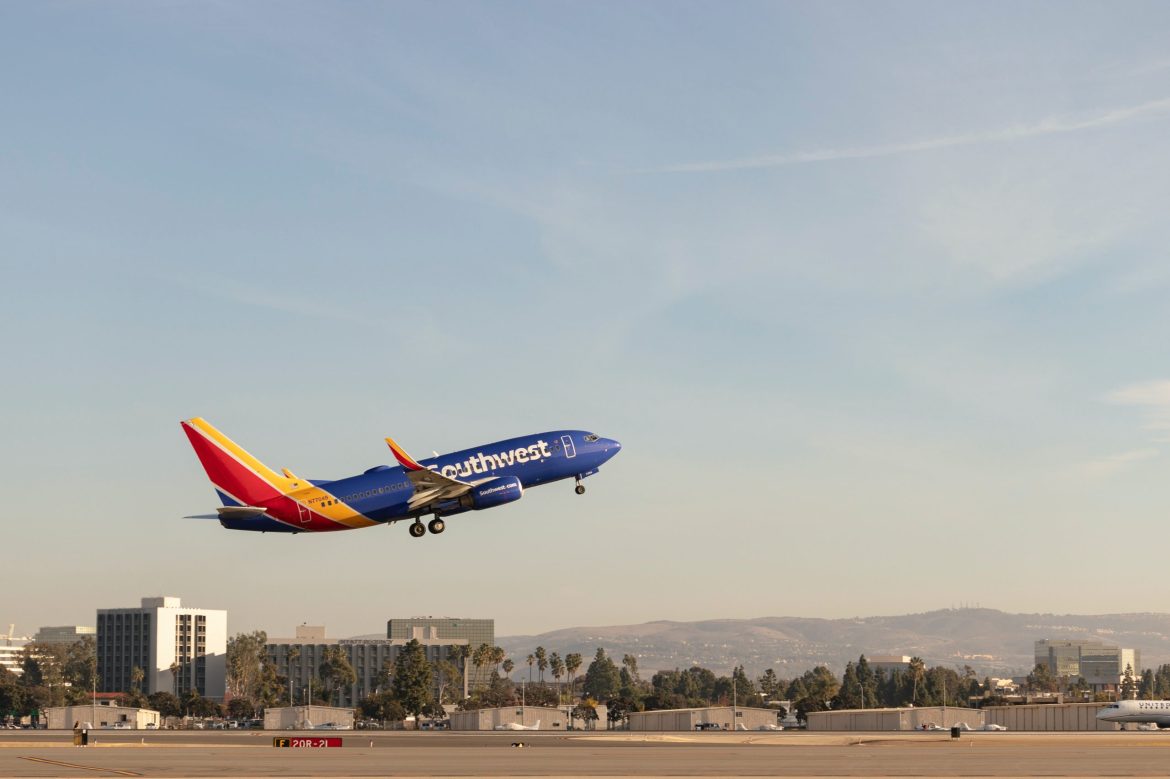
Southwest Airlines (NYSE: LUV) has defied its earnings slump to become the standout US airline stock in 2025.
In the first nine months of this year, the air carrier saw its profit crash an alarming 42%. Still, LUV shares are currently up more than 70% versus their year-to-date low in late April.
More importantly, Southwest has even outperformed its larger peers, including Delta Airlines and United Airlines in 2025 as well, indicating it’s riding a wave of idiosyncratic tailwinds – not sector-wide momentum.
But all of that is in the past now. A more important question is: can LUV replicate this exceptional performance in the coming year? Let’s find out!
What has caused Southwest Airlines’ stock to soar in 2025?
Southwest Airlines’ stock price rally this year has been fueled less by the overall demand trends and more by investor confidence in its strategic overhaul.
As Raymond James’ senior analyst, Savanthi Syth, put it in her latest research note:
What’s helping LUV shares is clearly the initiatives, not the demand, because if it were, you’d see it in other airline stocks as well.
The Dallas-headquartered air carrier is abandoning its decades-old open seating policy in favour of assigned seats – with premium legroom options available for a fee – which the experts believe will add billions in pretax earnings over the next few years.
Combined with new fare classes and tighter baggage policies, Southwest is signaling a shift toward revenue diversification that mirrors larger rivals, while still retaining its brand identity.
Is the upside priced in already in LUV shares?
Despite a massive rally in Southwest Airlines shares since April, Barclays remains convinced the air carrier isn’t out of juice just yet.
Earlier in December, its analyst Brandon Oglenski upgraded the airline stock, saying its adjusted earnings will come in over $4.0 next year and exceed $6.0 in fiscal 2027.
Bob Jordan, the firm’s chief executive, also echoed optimism in a recent CNBC interview, noting “the bookings that we’re seeing reflect the business case for assigned seating and extra legroom.”
That said, valuation remains a major red flag on LUV stock heading into the new year.
At the time of writing, it’s trading at about 46x forward earnings, which doesn’t just dwarves the multiple on rivals but the one on the likes of Nvidia as well.
Southwest’s forecast of $1.0 billion in incremental pretax earnings in 2026 underscores the bull case, but lingering risks related to tariffs, government budget pressure, and demand volatility could temper near-term results.
How Wall Street recommends playing Southwest Airlines
LUV shares currently pay a dividend yield of 1.73%, which does make them a bit more attractive to own – at least for the income-focused investors.
But Wall Street’s recommendation is to cut exposure to Southwest Airlines at current levels, as much of the overhaul-related upside is priced into it already.
At the time of writing, analysts have a consensus “hold” rating on the airline stock, with the mean target of about $38 indicating potential “downside” of roughly 8.0% from here.
The post Why Southwest emerged as the top US airline stock in 2025? appeared first on Invezz