
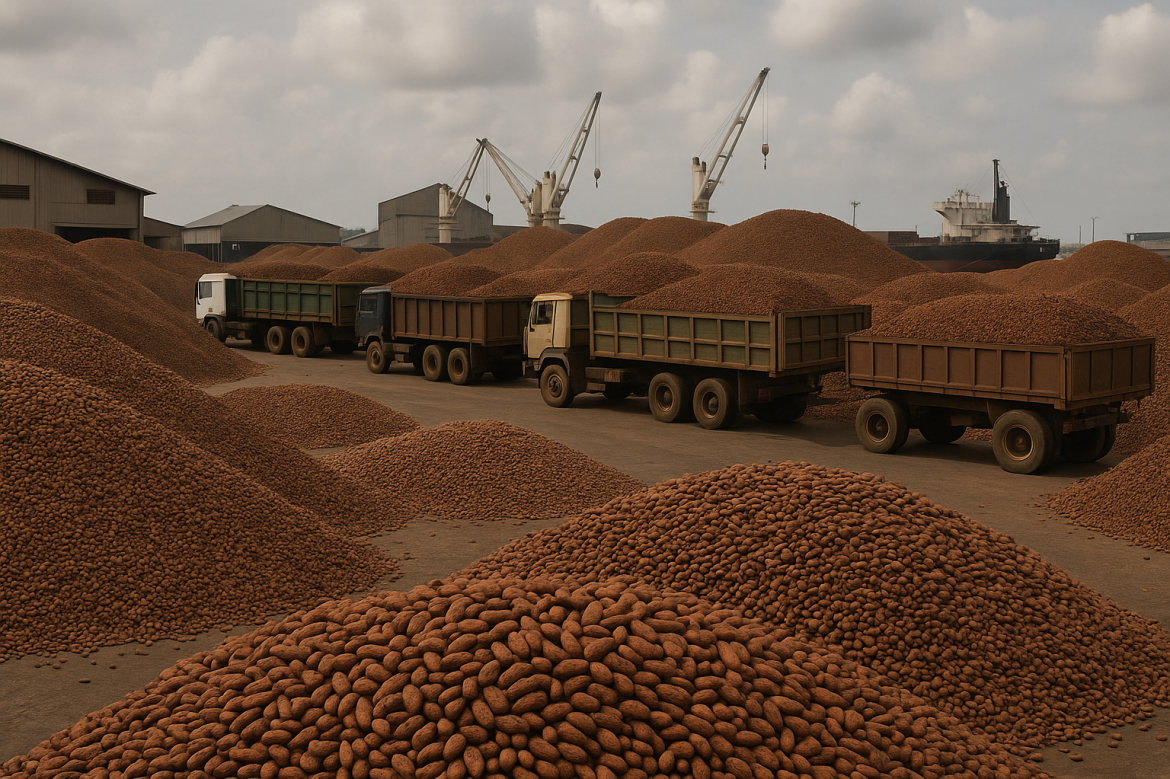
What’s driving the sudden cocoa pile-up at Ivory Coast’s busiest ports?
Ivory Coast is seeing an unusual build-up of cocoa at its main export hubs, with truckloads of beans arriving faster than the industry can process them.
For about three weeks Abidjan and San Pedro have handled far more cocoa than expected for this point in the season, a Bloomberg report said.
Weekly arrivals have recently exceeded 100,000 tons, lifting volumes well above normal patterns and raising concerns about the country’s supply chain capacity.
This surge is happening as global cocoa prices drop, exporters face tighter access to cash, and farmers race to sell beans before any potential change in pay.
Together, these conditions have created a temporary glut that risks distorting crop estimates and adding fresh pressure to already weakened prices.
Why arrivals have spiked
The pile-up begins with a sharp increase in the speed at which cocoa is reaching the ports.
Middlemen and cooperatives have been transporting beans directly to Abidjan and San Pedro in large numbers, searching for buyers as soon as possible.
Farmers have accelerated harvesting and delivery because they worry that the fall in global cocoa prices could lead to lower future pay, according to Bloomberg.
Their goal is to sell beans quickly while the current rate remains in place. This behaviour has pushed arrivals higher than usual and has strengthened the perception of a larger crop than originally anticipated.
How falling prices fuel the backlog
The drop in international cocoa prices has reduced the income of licensed exporters.
Many of them agreed to forward contracts at higher price levels earlier in the season, notes Bloomberg, but the current market weakness means they are earning less than expected.
Lower profitability has made banks more cautious about lending. With less access to credit, exporters struggle to pay for volumes they committed to purchase, and this has slowed the flow of beans moving through their systems.
As a result, middlemen and cooperatives are delivering beans directly to the ports rather than waiting for exporters inland. This creates congestion on site, increases pressure on storage space, and feeds into the broader backlog.
The regulator’s response
With port activity rising beyond normal capacity, the regulator Le Conseil Café Cacao has intervened to manage the flow.
One step has been to temporarily shut its arrival-recording system at intervals. This slows truck entries and prevents overcrowding at the gates.
Another complication has been delays in issuing delivery notes, the documents required to move cocoa from growing regions to the ports.
Farmers have said the slower pace has added uncertainty, since beans cannot be transported without the proper paperwork.
These delays have left around 120,000 tons of cocoa waiting in warehouses, unable to move forward, according to Bloomberg.
This idle stock contributes to the perception of a supply imbalance even though it has not yet reached the ports.
Enforcement measures within the sector
The regulator has also taken action against unlawful buying practices during this period of market stress. Some buyers have attempted to offer prices below the state minimum or reduce the weight of sacks.
The regulator has reported that four people have been arrested in its recent crackdown.
The aim is to maintain discipline within the domestic market while broader supply conditions remain volatile.
These steps come alongside separate efforts by the trading arm, Transcao Cote d’Ivoire, which has entered the market to purchase some of the beans that exporters currently cannot absorb.
What this means for the wider cocoa market
The temporary congestion in the Ivory Coast matters because the country is the world’s largest cocoa producer.
When arrivals rise quickly, and exporters struggle to keep pace, global expectations for supply can shift.
Cocoa futures have already more than halved from last year’s December peak, and the strong flow of beans from the Ivory Coast has reinforced the belief that a surplus is building.
The current backlog adds to this narrative, even though part of the surge reflects behavioural changes among farmers rather than a dramatic increase in actual production.
Until the ports work through the congestion and exporters regain easier access to financing, market estimates will remain vulnerable to distortion.
The post What’s driving the sudden cocoa pile-up at Ivory Coast’s busiest ports? appeared first on Invezz